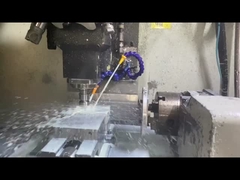
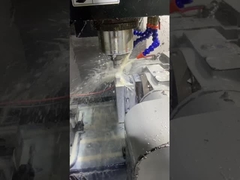
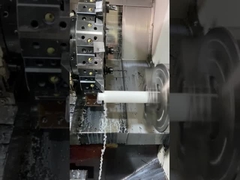
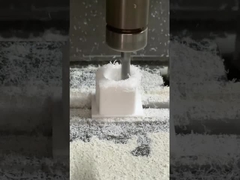
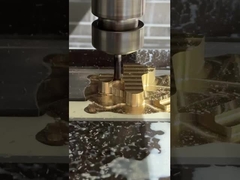
Brief: Discover the precision and accuracy of professional CNC turning parts, specifically designed for machining aluminum. Learn about the excellent machinability, low density, high strength, and conductivity of aluminum alloys, along with their diverse applications in aerospace, automotive, and more.
Related Product Features:
Excellent machinability: Aluminum is soft and easy to chip, allowing for fast and accurate cutting, drilling, and turning.
Low density and high strength: Aluminum alloys are lightweight yet strong, making them ideal for structural applications.
Conductivity: Aluminum parts offer good conductivity, which can be enhanced with electroless nickel plating.
Versatile applications: Used in aerospace, automotive, construction, and electromechanical industries.
Corrosion resistance: Aluminum alloys provide excellent resistance to corrosion and stress cracking.
溶接可能性: アルミニウム部品は簡単に溶接可能で,様々な製造ニーズに適しています.
Anodizing options: Surface treatments like anodizing enhance durability and offer color customization.
Wide range of alloys: Includes EN AW-6061, EN AW-6082, EN AW-7075, and EN AW-5052 for different mechanical properties.
FAQ:
What are the benefits of machining aluminum parts?
Aluminum parts offer excellent machinability, low density, high strength, and good conductivity, making them ideal for various industries like aerospace and automotive.
Which aluminum alloys are commonly used in CNC turning?
Common alloys include EN AW-6061, EN AW-6082, EN AW-7075, and EN AW-5052, each offering unique mechanical properties for different applications.
Can aluminum parts be surface-treated for enhanced durability?
Yes, aluminum parts can undergo surface treatments like anodizing, which improves hardness and offers color options, or electroless nickel plating for increased conductivity.